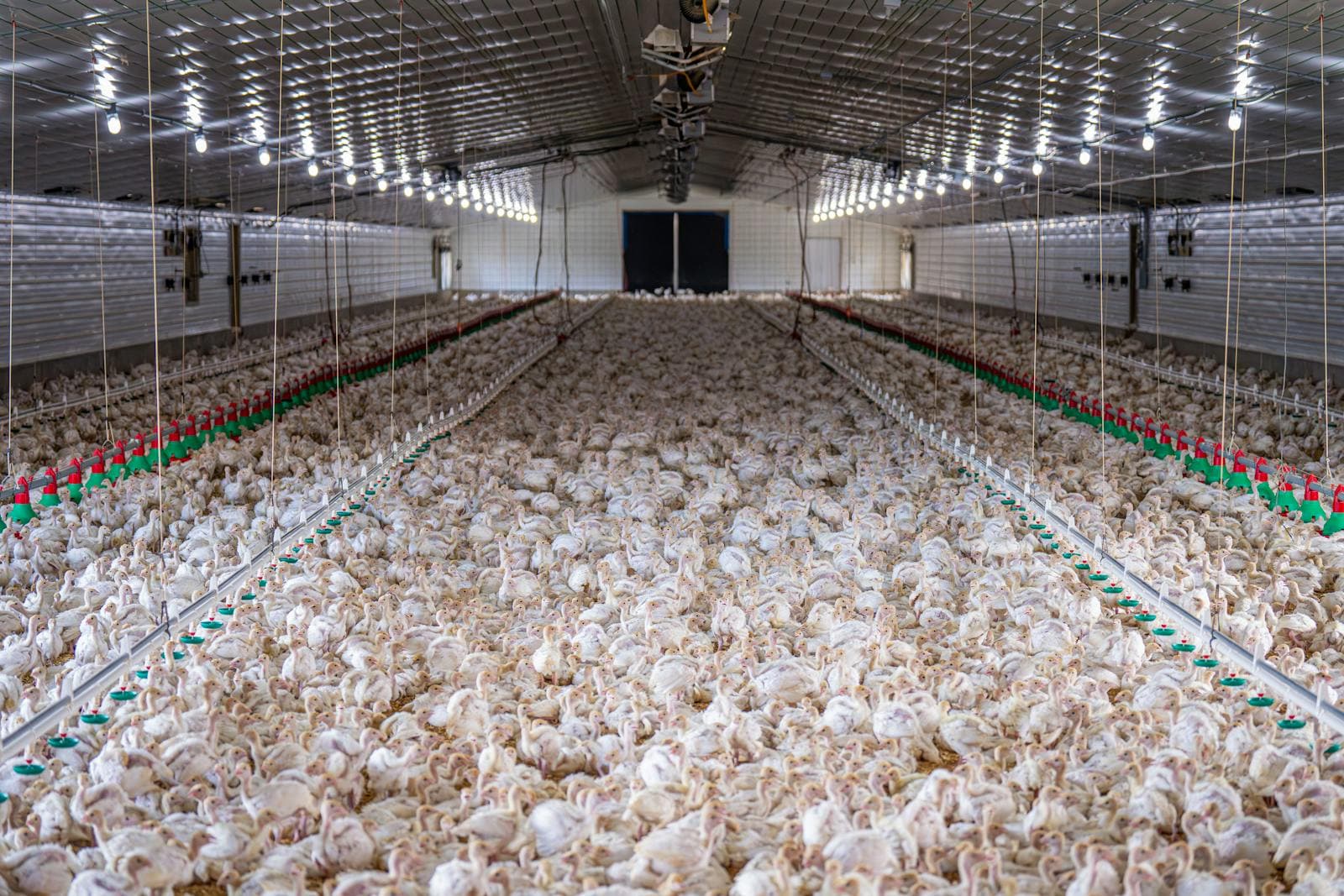
Walk into any high-performing broiler house and you'll find the manager can tell you, without looking at a phone, roughly what this week's FCR is, whether mortality is within range, and what the batch's expected harvest weight will be. That knowledge comes from a simple weekly discipline with five numbers.
1. Mortality Rate (%)
Calculate: (Deaths this week ÷ Opening population) × 100
Target: <0.5% per week (or <3% total for a 6-week cycle). Anything above 0.8% in a single week warrants an investigation, not just a note. Mortality isn't just a welfare indicator — it directly cuts your harvest weight and revenue.
2. Average Daily Gain (ADG)
Calculate: Weekly weight gain ÷ 7 days, from a representative sample of 30–50 birds.
Broiler ADG targets vary by strain and feed programme, but a Ross 308 bird at week 4 should be gaining 80–95 g/day. A batch falling more than 10% below target in any week is a signal: check feed availability, water, temperature, and health.
3. Feed Conversion Ratio (FCR)
Cumulative FCR tells you the efficiency of everything to date. Week-on-week FCR tells you whether this week's performance was better or worse than the last. Rising FCR mid-cycle, without weight gains to match, means something is consuming energy — usually disease or heat stress.
4. Uniformity (%)
Weigh 30–50 random birds. Calculate the percentage within 10% of the average weight. Target 80%+. Poor uniformity (below 70%) means some birds are dominating feeders and others are getting pushed out — a management issue that won't resolve without intervention.
5. Projected Batch Margin
At any point in the cycle, you should be able to see: if I harvest at the planned weight on the planned date, what is my expected gross margin? This number should update every time you add a feed cost, a mortality event, or a sampled weight. If projected margin drops below your minimum threshold, you act — change the harvest date, investigate costs, or review the ration.
Using FuroTrack for weekly batch review
FuroTrack calculates all five of these numbers from your records automatically. Your weekly batch review becomes: open the batch, check the five numbers, address anything out of range. Five minutes of review per batch, per week, instead of a Saturday morning with a calculator and last month's notebook.
Ready to try FuroTrack on your farm?
Create a free account without a payment card and set up your first farm records.
Start free